Smoothspeak: AI Dating Coach
- 4.5
- Rating
- 50.00K
- Installs
- Free
- Price

 Analysis by App-foxy
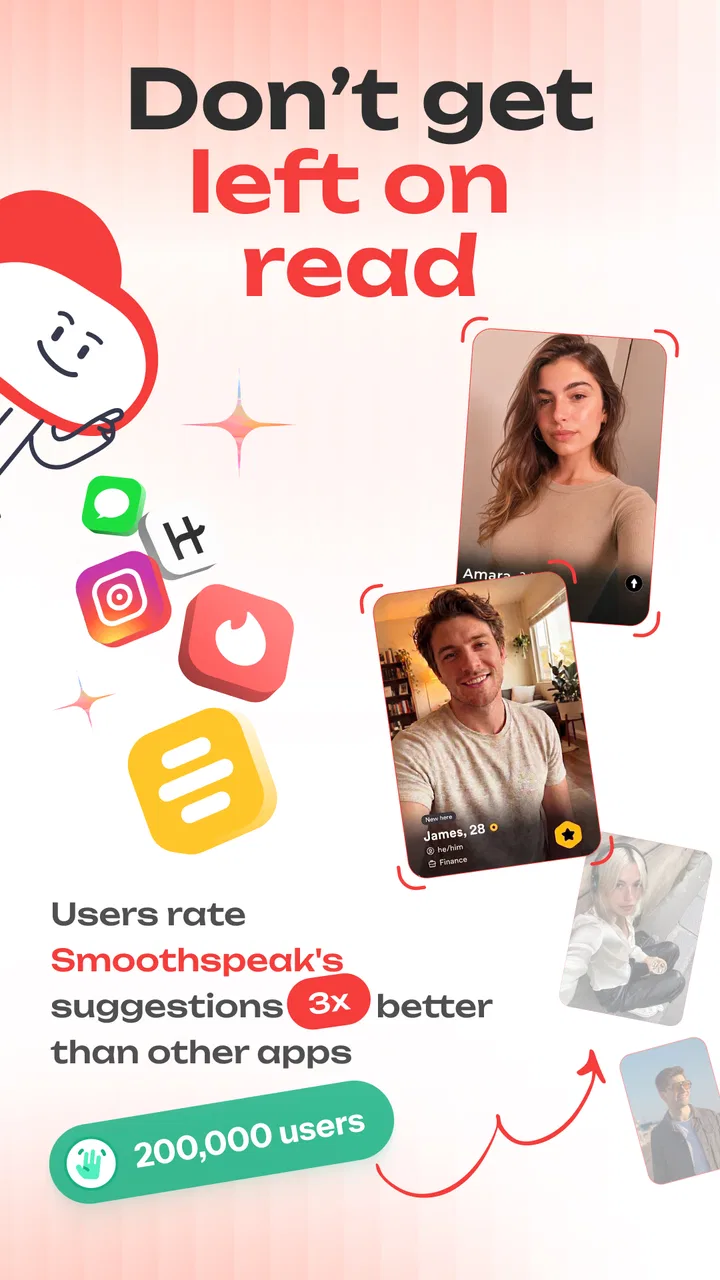
I approached Smoothspeak: AI Dating Coach as a practical lifestyle app rather than a dating platform. Its purpose is to help with the words around dating: starting a conversation, replying without sounding awkward, and choosing a tone that feels more natural. That focus makes it interesting for anyone who knows what they want to say but gets stuck when turning a thought into a message.
The app comes from Smoothspeak and is free to install, with optional purchases ranging from $2.99 to $49.99 per item. It is aimed at a mature audience, carrying a 17+ content rating. I would not describe it as a replacement for genuine conversation or dating advice from a trusted friend, but it can be useful as a private drafting space when nerves make even a simple text feel harder than it should.
How Smoothspeak feels when you use it regularly
I look at regular use as a chance to build a steadier drafting habit, not a reason to hand every dating decision to an AI coach. A useful next step is to notice which edits you keep making yourself—shortening a line, softening a claim, or removing a joke—because that pattern can help you write more naturally before you open the app.
You May Also Like

 AccuWeather: Weather Radar
AccuWeather Review: A Quick, Clear Forecast for Everyday Decisions
For everyday plans, the best forecast is the one you can understand quickly. AccuWeather makes rain timing, radar, and local conditions easy to act on, with a few trade-offs.

 Hill Climb Racing
Why Hill Climb Racing Still Turns Crashes Into One More Run
A tiny car, a bumpy hill and one more upgrade: Hill Climb Racing keeps resurfacing because its simple chaos makes every near-miss feel personal.

 AliExpress - Shopping App
AliExpress Makes Global Shopping Feel Personal, but Shoppers Bear the Risk
AliExpress turns a global marketplace into a pocket-sized discovery engine. Its reach is useful, its shopping loop compelling, and its trade-offs easy to miss.

 Lords Mobile: Kingdom Wars
Lords Mobile Is a Kingdom-Building Routine, Not a Quick Match
A case-by-case verdict on the building, battles, device demands, and social commitments that make Lords Mobile rewarding for some players and exhausting for others.

 PDF Scanner app - TapScanner
TapScanner Makes Paperwork Easier to Capture, Check, and Share
TapScanner makes scanning with a phone feel less like a rescue operation and more like a dependable step in getting work done. Its capture tools are useful, though not flawless.

 Block Blast!
 Shows How Much a Puzzle Game Can Leave Out
A quiet grid game shows why puzzle players increasingly value instant clarity, repeatable skill and low-pressure play—and where the genre still needs to catch up.
More From Our News Desk
View All News


Quick help is the main reason to open it
The strongest part of the concept is immediacy. When I am staring at a message and wondering whether it sounds too eager, too cold, or simply dull, an AI coach can offer a starting point much faster than searching through general dating articles. That matters because the problem is usually not a lack of information. It is the small moment of hesitation before sending something personal.
In everyday use, I would treat Smoothspeak as a writing companion. I would form my own idea first, then use the app to polish the wording rather than asking it to invent my personality. That approach produces better results because the final message still has something recognisably mine in it. The app is most helpful when I already know the situation but need help with tone, timing, or clarity.
The speed expectation should stay realistic. An AI response can feel fast when the request is short and specific, but the quality of the suggestion depends on how clearly the situation is explained. A vague request such as “what should I say?” gives the coach very little to work with. A better prompt includes the relationship stage, the message received, and the feeling I want to communicate.
That leads to one of my most useful tips: describe the emotional goal, not only the words. Saying that I want to sound interested without pressuring the other person is more useful than asking for a “better reply.” This small change can make the output less generic and gives me more control over the result.
A realistic message-writing scenario
Imagine receiving a reply after suggesting a second date. The other person says they are busy this week but might be free later. A rushed answer could sound disappointed, while an overly casual one might appear uninterested. I would use Smoothspeak to test a few approaches: warm and patient, playful but restrained, or direct about staying in touch.
The important benefit is not blindly copying the first suggestion. I would compare the alternatives, remove phrases I would never say, and keep the part that expresses my actual intention. In that workflow, the app reduces the blank-page problem without taking responsibility for the relationship. That distinction is important: it helps me communicate, but it cannot know how the other person will interpret every sentence.
This is also where the app can be more useful than a standard grammar checker. A grammar tool may make a sentence correct, but correctness is not the same as emotional tact. Smoothspeak is designed around dating conversations, so the relevant question becomes whether a message feels appropriately warm, confident, or considerate.
What happens during heavier use
Light use is easy to understand: open the app, explain a situation, review a response, and adapt it. Heavier use is more demanding because I may want to work through several messages in one sitting. For example, I might draft an opening line, revise a reply, and then ask for help making a follow-up less formal. That kind of session tests not only response speed but also how consistently the advice fits the context.
My recommendation is to keep a clear purpose for each request. Asking for five completely different rewrites can create noise rather than better communication. I get more value by changing one variable at a time: first the level of confidence, then the amount of humour, then the length. This makes it easier to see which version actually suits me.
There is a trade-off here. Convenience can encourage over-editing. A message that has been polished repeatedly may become less natural than the original. If I spend several minutes trying to make a short text perfect, the app has stopped saving time. I would set a practical limit: choose the version that sounds like something I could say aloud, make one final personal adjustment, and move on.
Another heavy-use concern is emotional dependence. Dating uncertainty can make people ask for reassurance over and over, but an AI coach cannot replace a decision about boundaries, compatibility, or consent. I would use the app for wording and perspective, not as the final authority on whether someone is trustworthy or whether I should continue a relationship.
Reliability depends on the quality of context
The app’s reliability should be judged by usefulness, not by whether every suggestion is perfect. Dating language is subjective. A message that feels charming to one person may feel rehearsed to another, and an AI system cannot fully reproduce the history between two people. I would therefore read each suggestion critically, especially when the situation involves conflict, rejection, vulnerability, or a sensitive personal topic.
For ordinary drafting, the most dependable workflow is specific and restrained. I would explain what happened in plain language, identify what I want to avoid, and ask for a small number of alternatives. This reduces the chance of receiving a dramatic response to a minor situation. It also makes the app easier to use when I am tired or distracted.
Stability matters in a different way. A writing assistant should feel predictable enough that I can return to it without rebuilding the entire situation from memory. I would keep my own notes about the key facts of a conversation rather than assuming the app will understand every previous exchange. That habit protects against misunderstandings and keeps me in control of what I share.
I also prefer using it as a private drafting step instead of composing directly inside a dating service. I can review the wording, remove unnecessary personal details, and decide whether the message reflects my real voice before sending it elsewhere. This extra pause is valuable because speed is not always the goal in dating communication.
Device and age considerations
Smoothspeak is available for Android devices running version 8.0 or later, which gives it a broad compatibility range for people who do not use a recent phone. That does not automatically mean every older device will feel identical in daily use. The practical experience can still depend on available storage, background activity, connection quality, and how many other apps are open.
For a lightweight writing task, I would expect modest demands compared with a game or a video editor, but I would not assume that every delay is caused by the phone. AI-assisted responses can depend on network communication, so a slow or unstable connection may affect the experience even when other parts of the device seem fine. If a response takes longer than expected, checking the connection before repeatedly tapping the request is the sensible first step.
The mature age rating is worth taking seriously. Dating conversations can involve adult subjects, but that does not make the app appropriate for younger users. Parents choosing apps for a shared device should consider the rating alongside the nature of the conversations the tool is intended to support.
Storage and battery are less likely to be the main reasons to reject this kind of app, but device constraints still affect comfort. On an older phone with aggressive memory management, switching between a dating app and Smoothspeak may interrupt the workflow. I would copy only the relevant part of a conversation, move between apps deliberately, and avoid treating the coach as a permanent second screen.
How it compares with familiar alternatives
The usual alternative is asking a friend for advice. A friend can understand my personality and history better, and they may notice when I am ignoring an obvious warning sign. Smoothspeak wins on availability and privacy from other people: I can ask for a rewrite immediately without waiting for a reply or explaining the entire situation aloud.
A grammar or writing app is another comparison point. Those tools are often better for spelling, punctuation, and general clarity. Smoothspeak is more focused on the social meaning of a message, which is the part a conventional checker may not address. If my problem is a confusing sentence, I would use a grammar tool. If the sentence is technically fine but emotionally off, this app is the more relevant option.
General-purpose AI assistants may offer wider knowledge and more flexible conversation, but they require me to frame the dating context myself. Smoothspeak’s narrow purpose can be an advantage when I want a direct starting point without building a detailed instruction each time. The trade-off is that a specialised coach may feel less suitable for topics outside dating communication.
There is also the option of writing without assistance. That remains the best choice when authenticity matters more than polish, particularly in a message where my imperfect wording is part of the charm. I would not use an AI coach to manufacture a personality, hide a major intention, or create emotional pressure. Those are situations where a different approach is healthier.
Who will get the most from it
I think Smoothspeak is a good fit for people who overthink messages, especially during early conversations when every reply feels unusually important. It can also help someone who communicates well in person but struggles with short-form texting. The app gives that user a place to test tone before committing to a message.
It may be particularly useful for people learning how to express interest more clearly. Instead of relying on vague hints, I can ask for a direct but respectful version and then adapt it to sound like me. That is a practical communication exercise, not merely a shortcut. Over time, noticing the differences between timid, confident, and pushy wording can improve my own judgement.
Someone who wants a complete dating service should look elsewhere. This is not the same as finding matches, arranging dates, or managing a profile. It is a supporting tool for communication. Likewise, anyone uncomfortable with AI-assisted writing may prefer a trusted friend or their own first draft, particularly for emotionally important messages.
The purchase model also deserves attention before using it heavily. The app itself is free, while optional in-app items cost from $2.99 to $49.99 each. I would begin with the free experience, decide whether the suggestions genuinely improve my conversations, and only then consider paying. A tool that saves occasional hesitation may be worthwhile, but frequent purchases are harder to justify if I am using it for every minor reply.
My performance verdict after weighing the trade-offs
Smoothspeak works best when I treat it as a fast second opinion for dating texts. Its perceived speed is most valuable during small moments of uncertainty, while its usefulness during long sessions depends on focused prompts and sensible editing. I would not expect it to solve every communication problem, and I would be cautious about using it for serious emotional decisions.
The app has built a noticeable audience, with an average rating of 4.5 from around 5.7 thousand ratings and more than 50 thousand installs. Those figures suggest that the idea is resonating with users, although they do not remove the need to judge whether its style suits my own voice. Smoothspeak is currently at version 1.9.10, and it was released on February 19, 2025.
My final recommendation is fairly specific: try it if your main obstacle is wording, tone, or the fear of sending an awkward message. Use it as a drafting partner, keep personal details to a minimum, and always make the final message your own. Skip it if you want matchmaking, relationship counselling, or a tool that can reliably interpret another person’s intentions.
The best reason to use Smoothspeak is not to sound perfect; it is to communicate more clearly while remaining recognisably yourself. For that limited but useful job, I can see it earning a place in a dating toolkit, provided I keep my judgement ahead of the app’s suggestions.
FAQs for Smoothspeak: AI Dating Coach
01What is Smoothspeak: AI Dating Coach, and how does it work?
Smoothspeak: AI Dating Coach is designed to help users improve their dating conversations and communication skills. It can provide suggestions for opening lines, replies, profile wording, and ways to keep a chat engaging. The app is best viewed as a writing and confidence aid rather than a replacement for genuine conversation, emotional awareness, or personal judgment when interacting with potential matches.
02Can Smoothspeak help me write replies for dating apps and text messages?
Yes, the app is intended to assist with situations such as starting a conversation, responding to an unclear message, recovering from an awkward exchange, or making a reply sound more playful and natural. Results may depend on the context you provide, so it is worth reviewing every suggestion before sending it. Personalizing the wording usually makes the message feel more authentic and better suited to your communication style.
03Is Smoothspeak: AI Dating Coach free to download and use?
The application may be available to download at no initial cost, but some features, usage limits, or advanced coaching tools can require an in-app purchase or subscription. Pricing, trial periods, and included features may vary by platform and can change over time. Before confirming payment, check the app store listing and subscription screen carefully, including renewal terms and cancellation instructions.
04Does Smoothspeak guarantee better matches or successful dates?
No dating coach can guarantee matches, replies, or successful relationships. Smoothspeak can help you organize your thoughts, improve wording, and approach conversations with more confidence, but the outcome still depends on compatibility, timing, honesty, and how the other person responds. Users should avoid copying advice mechanically and should never use generated messages to misrepresent their personality, intentions, or relationship status.
05Is it safe to share private conversations or personal information with the app?
Before entering screenshots, names, phone numbers, addresses, workplace details, or other sensitive information, review Smoothspeak’s privacy policy and understand how submitted content may be processed or stored. It is safer to remove identifying details and share only the minimum context needed for advice. You should also avoid relying on AI-generated guidance for serious emotional, safety, or harassment-related situations, where trusted people or professional support may be more appropriate.
Pros
- Personalized advice helps improve confidence before sending messages.
- Useful conversation prompts can reduce awkward pauses on dates.
- Simple interface makes coaching tips quick to access.
- Can help identify unclear or overly intense dating messages.
- Private
- on-demand guidance is available whenever you need it.
Cons
- AI suggestions may sound generic or unlike your natural personality.
- Advice can miss important context from complex dating situations.
- Some features may require a subscription or in-app purchase.
- Sharing personal dating details may raise privacy concerns.
- It cannot replace honest communication or professional relationship advice.

Smoothspeak: AI Dating Coach
Gallery